Regulatory Directive and Procedural Context
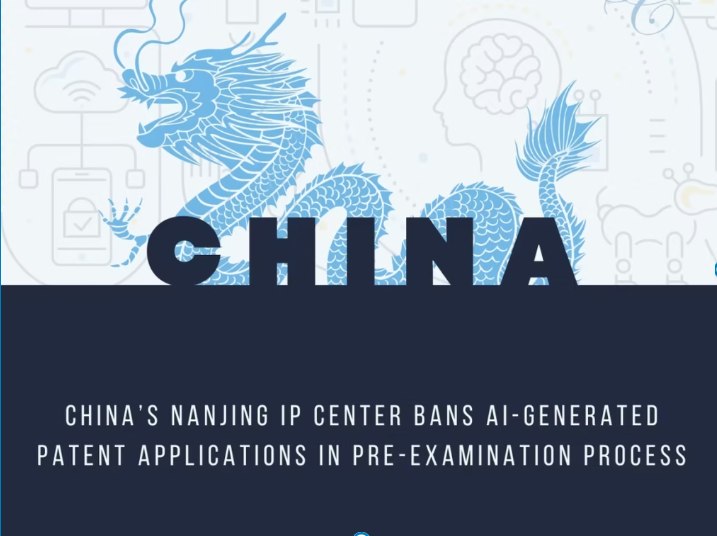
The Nanjing Intellectual Property Protection Center (NIPPC) issued a formal directive on the 4th of June 2025, strictly prohibiting the use of generative artificial intelligence tools in the preparation of patent application materials submitted for regional pre-examination. This development directly affects applicants seeking accelerated review under China’s pre-examination mechanism, which enables patent filings to be initially assessed by designated regional authorities before potential fast-tracking at the national level by the China National Intellectual Property Administration (CNIPA).
The prohibition was prompted by findings that certain application documents submitted for review had been generated, in whole or in part, using AI-based systems. The Center emphasized that such practices compromise the authenticity and reliability of the patent system, which is predicated on verifiable research and bona fide technical contributions.
Core Provisions of the Ban
The directive sets out clear and binding obligations for applicants and their representatives:
- Applicants and patent agencies are explicitly barred from submitting application materials that incorporate AI-generated content. All technical disclosures, written descriptions, claims, and drawings must be produced manually by the inventor or a licensed patent professional, based strictly on actual research results and genuine inventive activity.
- AI is also prohibited in the creation of supporting R&D documentation. This includes, but is not limited to, test reports, development records, and technical analyses. These materials must originate from authentic research processes, with sufficient traceability and evidentiary reliability to establish the legitimacy of the claimed invention.
Sanctions for Non-Compliance
The directive further outlines the repercussions for violations of the policy:
- Where an application is found to contain AI-generated content, the pre-examination request will be denied. The applicant and their agent will receive formal notification in the form of a “Pre-Examination Quality Notice,” identifying the nature of the non-compliance.
- In more serious cases, the NIPPC may invoke administrative sanctions pursuant to the Management Measures for Pre-Examination Services by Filing Entities and Agencies. Sanctions may include suspension from the pre-examination program and placement on a regulatory watchlist under a graded compliance regime.
- In cases of grave misconduct, where conduct is found to contravene Article 20 of the Patent Law or Article 11 of the Implementing Regulations, the matter may be escalated to higher administrative authorities. In such instances, the NIPPC may recommend formal disciplinary action and legal penalties against the parties involved.
Verification and Monitoring Protocols
To enforce these requirements, the NIPPC will implement a multilayered verification regime. Measures will include the deployment of advanced content detection systems to assess the originality and authorship of submitted materials, expert technical evaluation panels to assess substantive credibility, and the right to demand clarification or additional documentation from applicants regarding key disclosures.
This initiative underscores China’s evolving stance on the responsible use of AI in the intellectual property domain. By requiring patent documentation to reflect genuine human inventiveness and verifiable technical development, the NIPPC seeks to uphold the integrity and reliability of the country’s innovation ecosystem