Syngenta Limited v. Controller of Patents and Designs: The Delhi High Court examined the ‘Boehringer Ingelheim Case‘ interpretation of Section 16(1) of the Patents Act. This section allows a patent Applicant to file a divisional patent application(s) relating to multiple inventions disclosed in the parent application. Earlier, in Boehringer Ingelheim Case the Court ruled that a divisional patent application can be filed only if the claims in the parent application relate to a plurality of inventions, and it is not sufficient if the plurality of inventions are found in the description part of the complete specifications alone.
Section 16(1) of the Patents Act recites:
“A person who has made an application for a patent under this Act may, at any time before the grant of the patent, if he so desires, or with a view to remedy the objection raised by the Controller on the ground that the claims of the complete specification relate to more than one invention, file a further application in respect of an invention disclosed in the provisional or complete specification already filed in respect of the first mentioned application.”
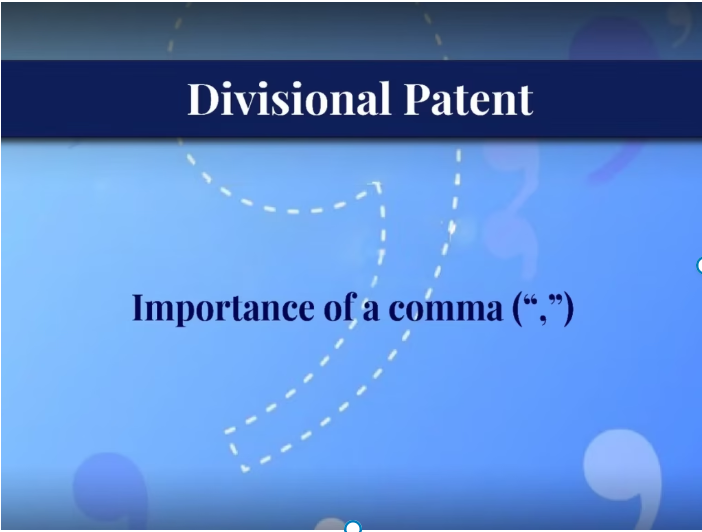
The Delhi High Court analyzed the structure of Sec. 16(1) and observed that it includes the phrase “if he so desires“between two commas and noted the absence of a comma after the phrase “raised by the Controller“. In view of the analysis, the Delhi High Court opined that applicants could independently file divisional applications and there is no need for the claims to include multiple inventions, contrary to the Boehringer Ingelheim ruling. Further, the Delhi High Court framed the following two issues for the Division Bench to examine and return its view for a divisional application to be maintainable:
1) Does the requirement of a plurality of inventions being contained in the parent application apply even where the Divisional Application is filed by the applicant suo moto, and not on the basis of any objection raised by the Controller?
2) Assuming that the requirement of a plurality of inventions in the parent application is necessary, does the plurality of inventions have to be reflected in the claims of the parent application or is it sufficient if they are reflected in the disclosures of the complete specifications of the parent application?
We will continue to share any updates on this case as they arise.
Syngenta Limited v. Controller of Patents and Designs, C.A. (COMM. IPD-PAT) 471/2022